What makes a great product detail page? Defining the new standards for e‑commerce PDPs
In e‑commerce, products often have only seconds to make an impression. The brands that sell at first sight are increasingly the ones with the strongest product detail pages.
In previous decades, only the biggest retailers could create high-performing product experiences. Smaller brands without access to photographers, post-production studios, or dedicated content and merchandising teams often struggled to compete. Today, that gap is narrowing rapidly.
After analyzing tens of thousands of product detail pages across marketplaces, retailers, and direct-to-consumer brands, one pattern that we’ve observed at KuvStudio is clear: the product pages that convert best are rarely defined by a single great image or clever piece of copy. They succeed because every element works together to remove friction and move customers toward a confident purchase decision.
Shopping has always been visual, and product imagery remains one of the most important tools shoppers use to evaluate products online. As e‑commerce becomes more immersive, mobile-first, and visually sophisticated, the PDP has evolved from a source of product information into a critical conversion engine.
Table of contents:
- What is a product detail page?
- Why the PDP has become the new storefront
- Defining the new standard for high-performing product pages
- Six essential jobs every product detail page should do
- The anatomy of great product page design
- Which e‑commerce brands are raising the standard
- Common PDP mistakes hurting conversion
- Future-proofing your PDPs for AI shopping agents
- Building scalable PDP systems across your catalog
What is a product detail page?
A product detail page (PDP) is the page that provides all the information shoppers need to evaluate and purchase a specific product online.
It is the stage of the shopping journey where customers move from discovery to evaluation. A PDP typically includes product images, descriptions, variants, pricing, reviews, shipping information, and other supporting content.
While every e‑commerce store is different, the purpose of a PDP remains the same: to help shoppers understand a product, build trust in what they see, and feel confident enough to put their money down.
PDP vs PLP: what is the difference?
Product detail pages and product listing pages look relatively similar but serve different roles in the customer journey.
A product listing page (PLP) helps shoppers discover and compare multiple products through category pages, collections, or search results. A product detail page (PDP) is the next step in the funnel. It helps shoppers move from comparison to evaluation by providing the detailed information needed to make a purchase decision.
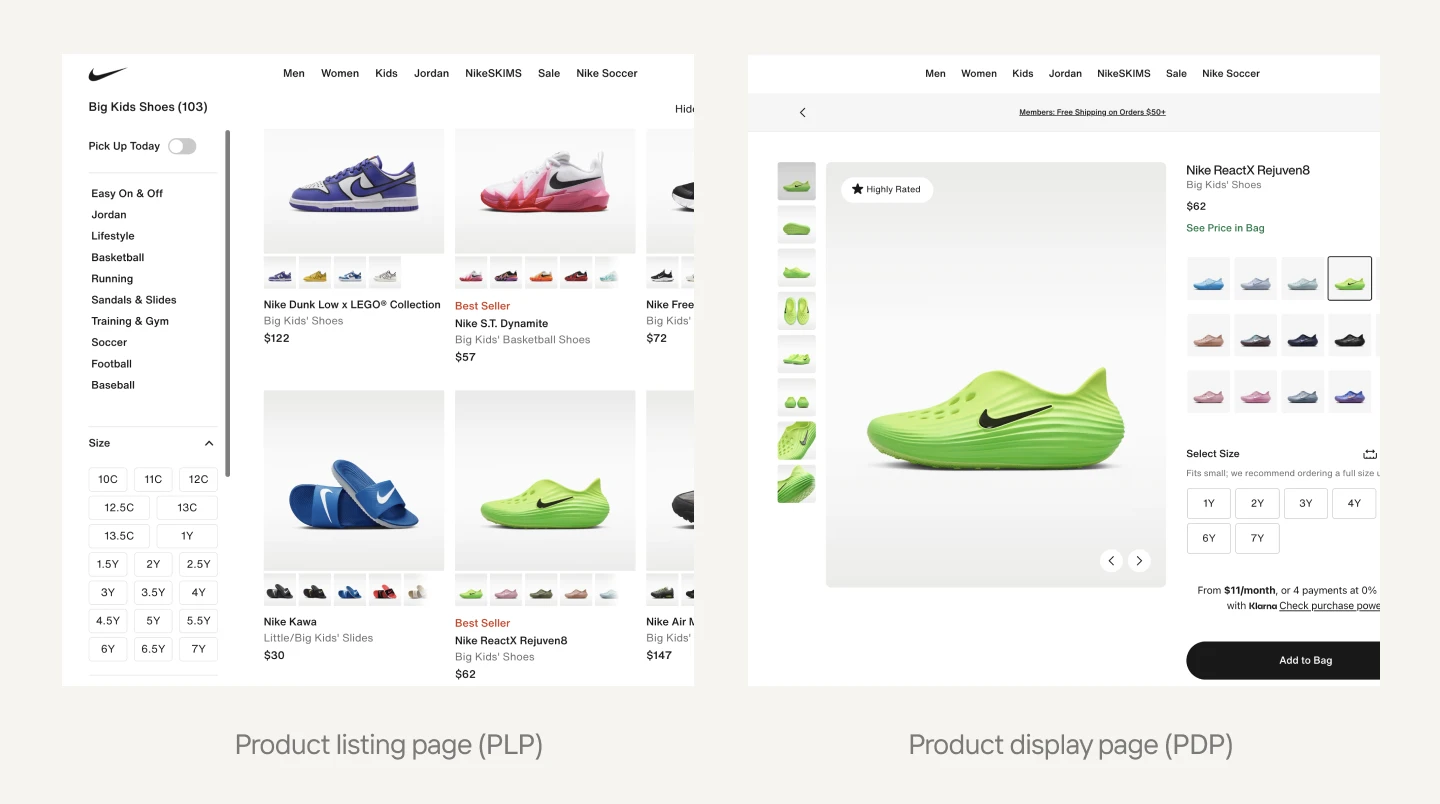
While there is some overlap between the two, this guide focuses specifically on the product detail page: the moment where shopper interest turns into purchase intent.
| PLP | PDP | |
|---|---|---|
| Purpose | Browse multiple products | Evaluate one product |
| Shopper intent | Discovery | Purchase decision |
| Content | Product grids, filters, thumbnails | Images, descriptions, reviews, variants |
| Image role | Capture attention | Build trust and confidence |
| Main KPI | Click-through rate | Conversion rate |
| Information depth | Summary-level | Detailed |
| Mobile behavior | Fast scrolling | Product evaluation |
| AI focus | Discoverability | Structured product data and metadata |
Why the PDP has become the new storefront
E‑commerce is heavily visual. Shoppers move through product grids the same way they scroll social feeds: quickly, instinctively, and with little patience for long blocks of text. In physical retail, shoppers can touch fabrics, inspect materials, and judge scale in person. Online stores rely on product images to recreate that experience.
The strongest PDPs are designed to eliminate doubt. They help shoppers understand the product, assess its quality, and make a purchase decision with confidence. On mobile, which now drives roughly three-quarters of e‑commerce traffic and about 60% of online sales, visual content plays a critical role in that process.
Shoppers notice inconsistency more than brands often realize. KuvStudio’s State of GenAI in Marketplaces (2026) report found that 63% of shoppers said inconsistent product images lower trust in a marketplace or seller. Those expectations are no longer limited to enterprise retailers. Marketplaces and social commerce platforms have normalized high visual standards across e‑commerce UX.
Regardless of whether someone is shopping from a global retailer or a small online store, the expectations are increasingly the same:
- Clear product photography
- Uniform image styling
- Accurate colors
- Visible texture and detail
- Realistic scale references
- Fast-loading mobile galleries
High-quality product photography is the baseline shoppers expect. The competitive advantage comes from repeatable systems that maintain cohesive product photography across an entire catalog, regardless of how many products a business sells.
The impact goes beyond aesthetics. Improvements in the visual quality of product images increasingly translate into measurable business outcomes. In KuvStudio’s Hidden Cost of Product Photography for SMBs (2026) report, sellers who tracked the results of improving their product images reported a median uplift of 30% in sales or conversion rate.
As shopper expectations continue to rise, product photography is becoming one of the most important drivers of product page performance. The brands that win are not necessarily those creating the most content, but those building the most effective visual systems.
Defining the new standard for high-performing product pages
Today’s strongest product pages combine clear and consistent product images, mobile-first design, structured information and scalable systems that help businesses convert more shoppers and grow more efficiently. Increasingly, they must also serve a second audience: AI systems.
Product pages are no longer interpreted only by shoppers. AI-powered search experiences, recommendation engines, and shopping agents now rely on images, structured metadata, product schema, and catalog consistency to evaluate and recommend products. The brands that optimize for both human shoppers and AI systems already hold the competitive advantage.
This shift is redefining what great product content looks like. Enterprise retailers are looking for ways to scale visual consistency across millions of products, while smaller businesses can now access capabilities that were once reserved for brands with dedicated studios and merchandising teams.
For the first time, growing e‑commerce brands can compete with product experiences traditionally associated with the industry's largest retailers.
KuvStudio’s State of GenAI in Marketplaces (2026) report found that 87% of shoppers ranked product visuals as the most important factor influencing purchase decisions. As visual commerce becomes more competitive, images are no longer just a creative asset, it's a growth lever.
Six essential jobs every product detail page must do
After reviewing product pages across marketplaces, retailers, and direct-to-consumer brands, we've found that the strongest PDPs are remarkably similar beneath the surface. While categories, aesthetics, and brand positioning may vary, effective product pages excel across six core areas.
Together, these six jobs provide a useful framework for evaluating product page quality. Weakness in any one area can create friction, reduce trust, or leave shopper questions unanswered. The strongest PDPs balance all six.
| Job | Why it matters |
|---|---|
| Product fidelity and trust | Reduces uncertainty and return risk |
| Image realism and craft | Builds confidence through believable, authentic images |
| Brand distinctiveness | Strengthens recognition and memorability |
| Visual consistency | Reinforces confidence across products and categories |
| Conversion focus | Guides buyers toward confident purchase decisions |
| Image type coverage | Improves clarity by answering shopper questions more completely |
1. Product fidelity and trust
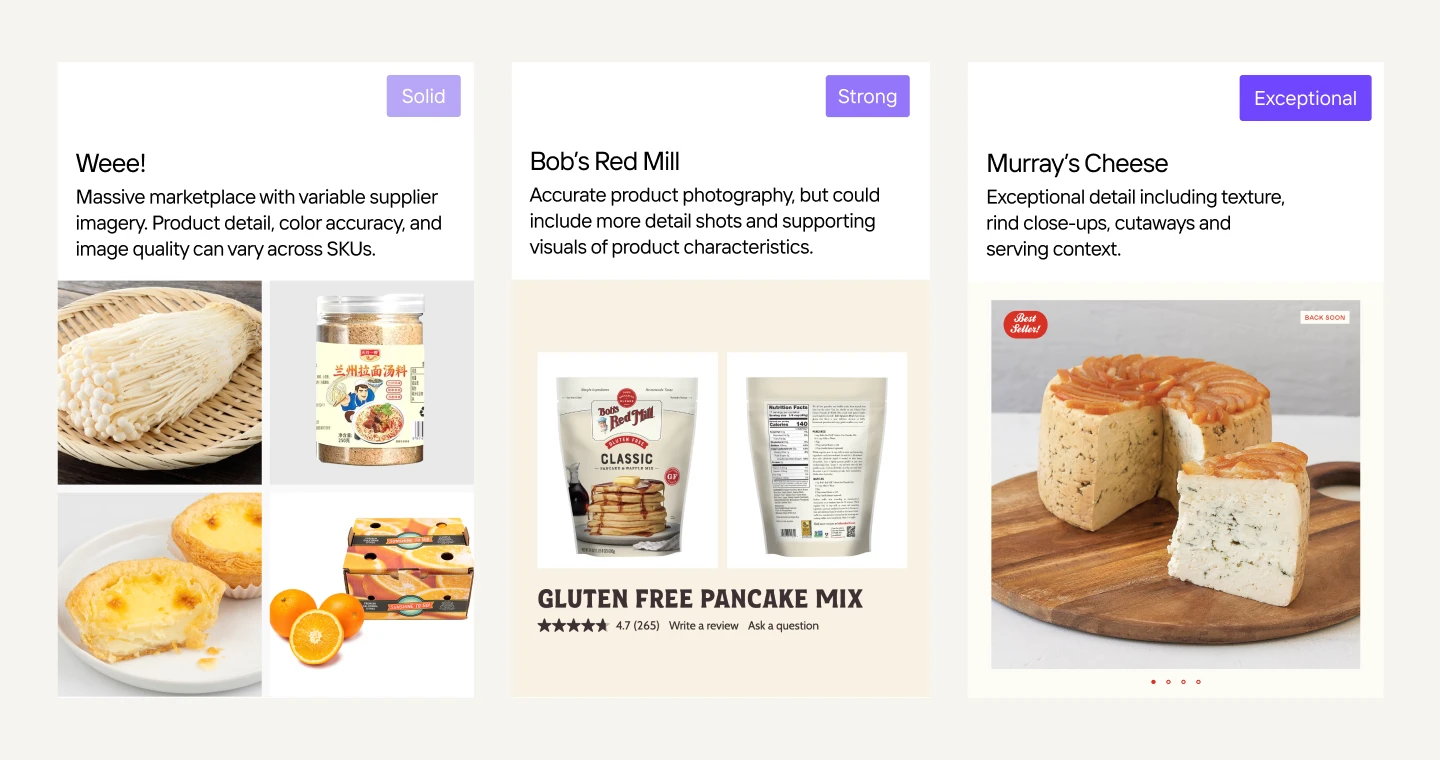
Product fidelity is the degree to which a product page accurately represents what a customer will receive. The strongest PDPs make products easy to evaluate online by showing accurate color, materials, texture, scale, and construction. Detail photography, close-ups, and image type coverage help bridge the gap between digital browsing and physical inspection.
Fidelity when done well not only builds trust, it reduces returns. KuvStudio's photography and photo-editing trends research revealed that 22% of product returns are driven by discrepancies between a product's online appearance and its real-world appearance. The more accurately a PDP represents color, texture, materials, and scale, the less likely shoppers are to feel disappointed after purchase.
2. Image realism and craft
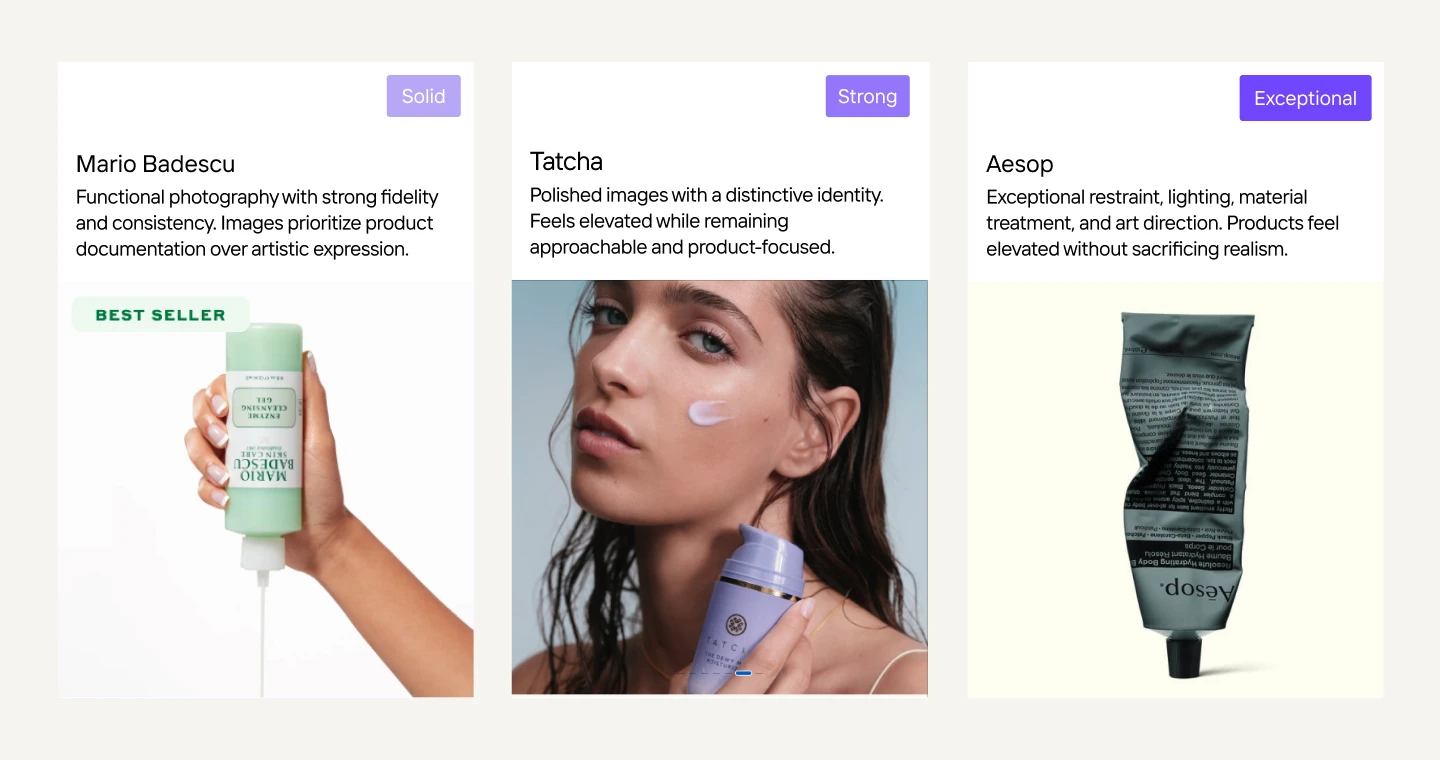
Strong product photography is not only about showing the product clearly. It is also about presenting it thoughtfully and believably. A product should appear naturally integrated into its environment, with convincing scale, lighting, perspective, and physics that the human eye accepts instinctively. Composition reinforces that realism through strong framing, thoughtful use of negative space, visual hierarchy, and controlled art direction.
The strongest PDPs combine intentional composition with visual authenticity. Whether the style is minimal and functional or highly art directed, products should sit naturally within their surroundings, with accurate proportions and interactions with environmental elements that hold up both at a glance and under closer inspection.
3. Brand distinctiveness
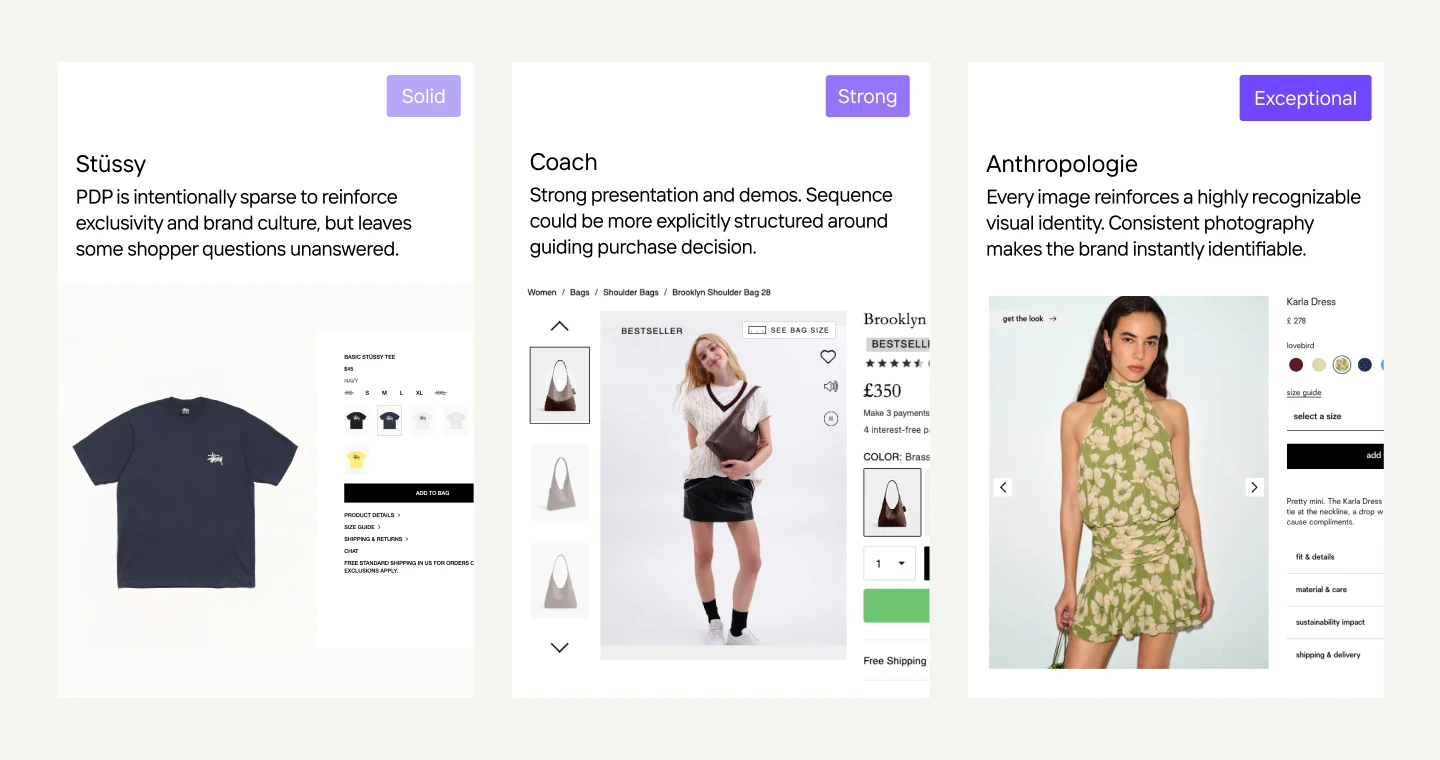
Strong PDPs communicate a recognizable and unified point of view through composition, lighting, styling, color treatment, and art direction. This goes beyond making images look attractive; it establishes a distinct visual and sensory identity that expresses what the brand stands for. The goal is to build a visual signature that shoppers can recognize instantly, even before they see a logo.
Brand distinctiveness is not simply the result of creative execution, but of a deliberate and consistent expression of a unique value proposition. Over time, this disciplined expression becomes part of the brand itself.
4. Visual consistency
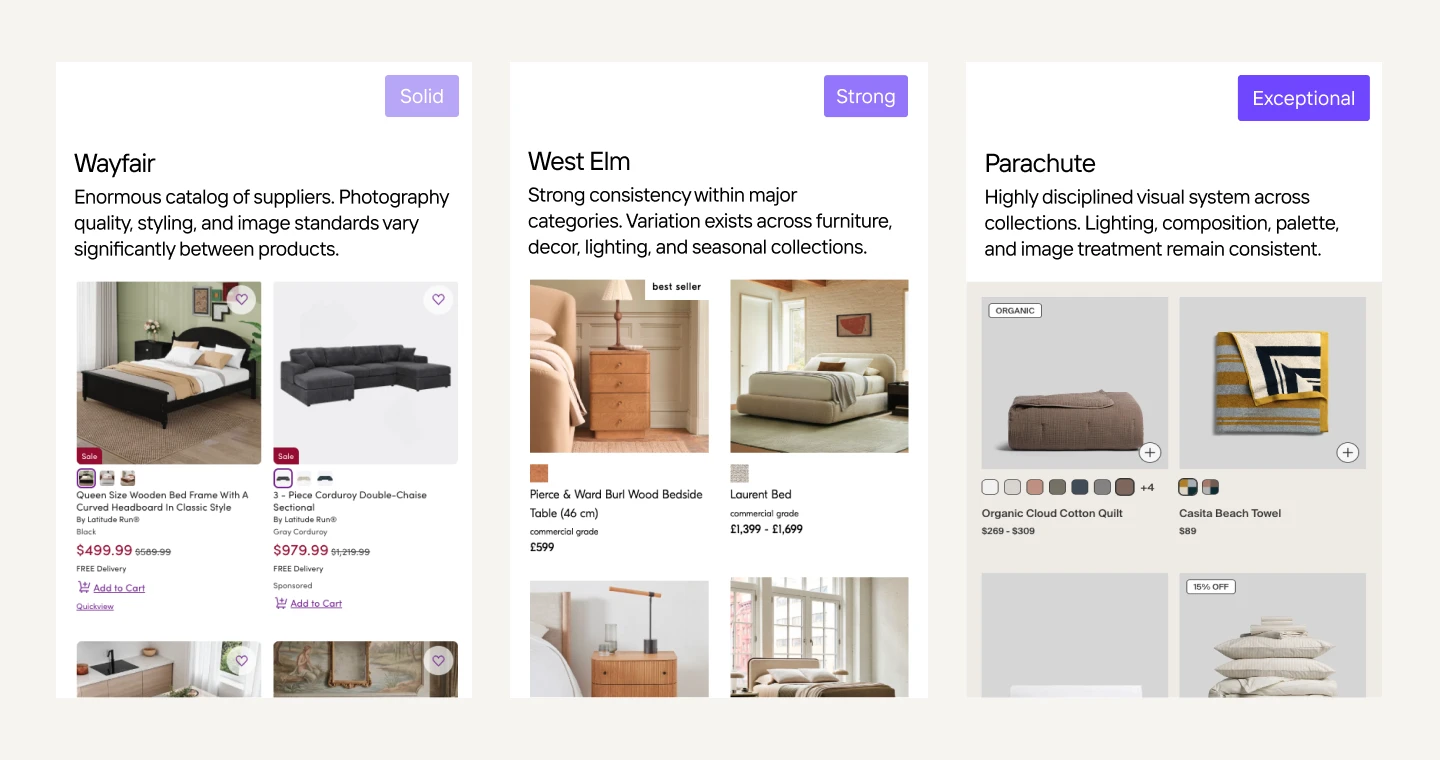
Visual consistency is one of the clearest indicators of a well-executed product experience. Lighting, backgrounds, image angles, cropping, shadows, and styling should feel connected across the entire catalog, not just for the hero shots. The strongest brands apply the same visual language across hero images, variants, lifestyle photography, and supporting assets.
Shoppers notice inconsistency more than brands often realize. When products appear to have been photographed using different standards, the experience can feel fragmented, leading shoppers to question the brand’s reliability.
5. Conversion focus
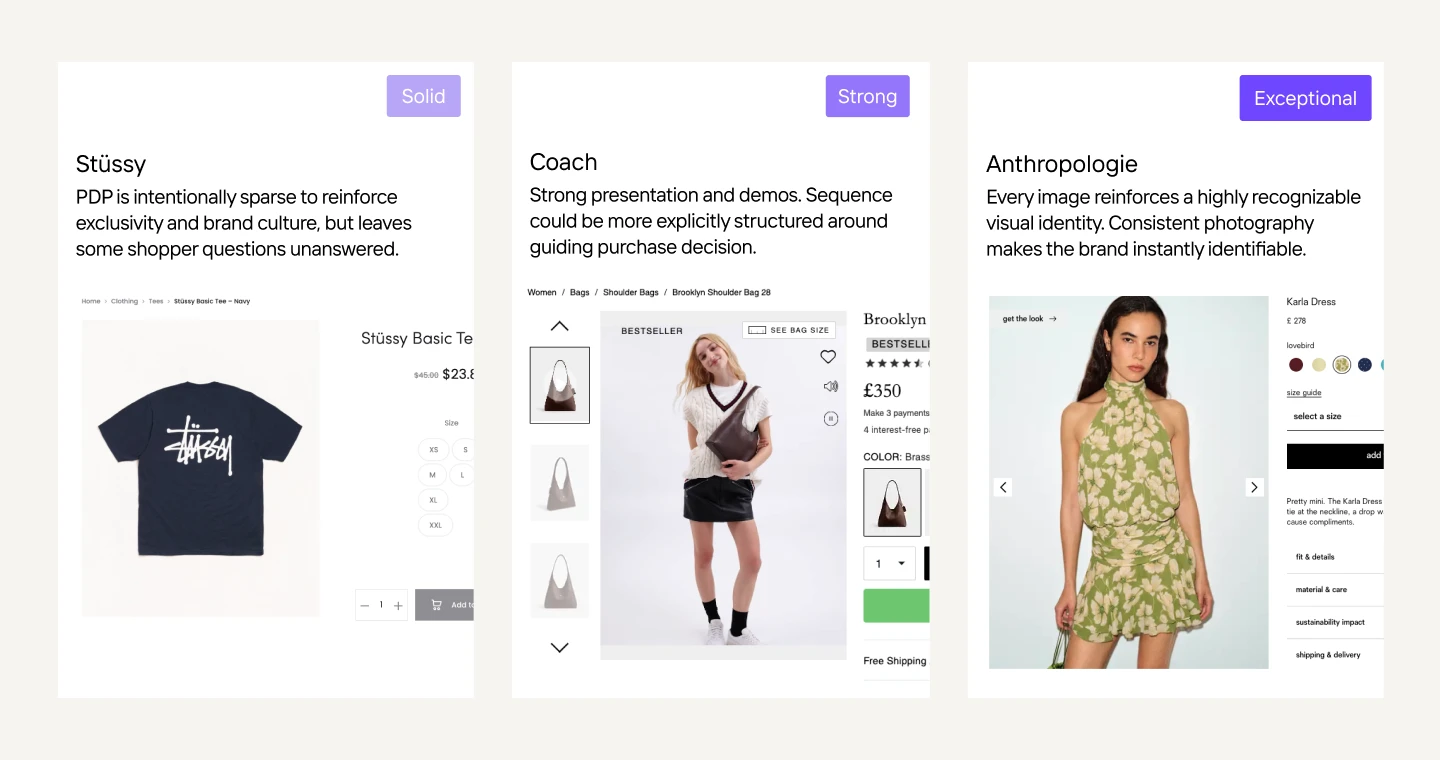
A product page is not simply an image collection. It is a decision-making environment where images carry the primary weight of evaluation. The strongest galleries present visuals in a deliberate order that moves shoppers from initial interest through to purchase confidence, answering key questions along the way.
A typical sequence might move from hero images to alternate product angles, lifestyle context, detail shots and scale references. Every image should answer a question about fit, material, functionality, quality, or use case.
6. Image type coverage
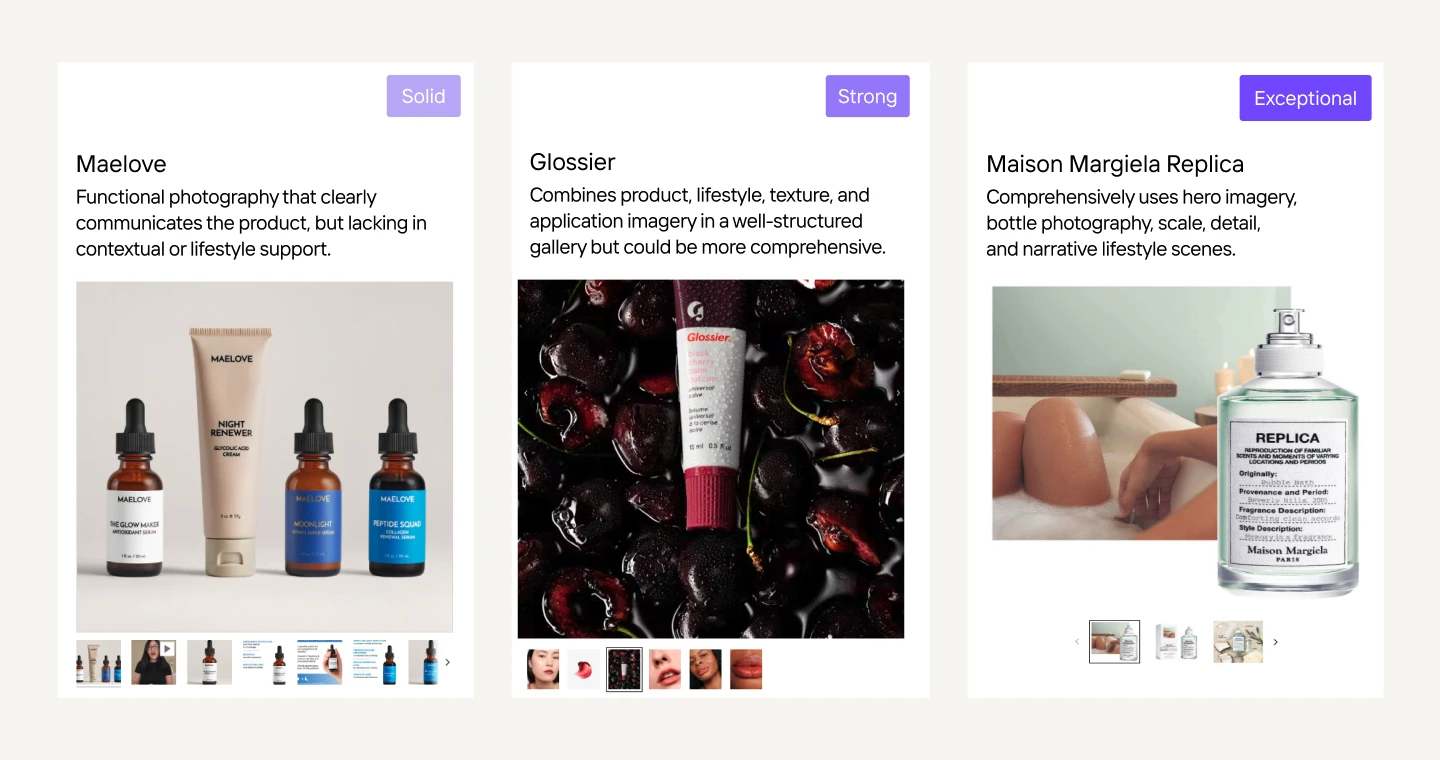
No single image can answer every shopper question. The strongest PDPs vary image types, with each one serving a different purpose in the shopping funnel.
This might include:
- Lifestyle images to create desire and help shoppers imagine the product in real life
- Hero images to establish instant product recognition and drive clicks from search results
- Product views and alternate angles to help shoppers evaluate the item
- Detail and macro shots to showcase materials, craftsmanship, texture, and quality
- Scale and fit references to remove uncertainty and give shoppers the confidence to purchase
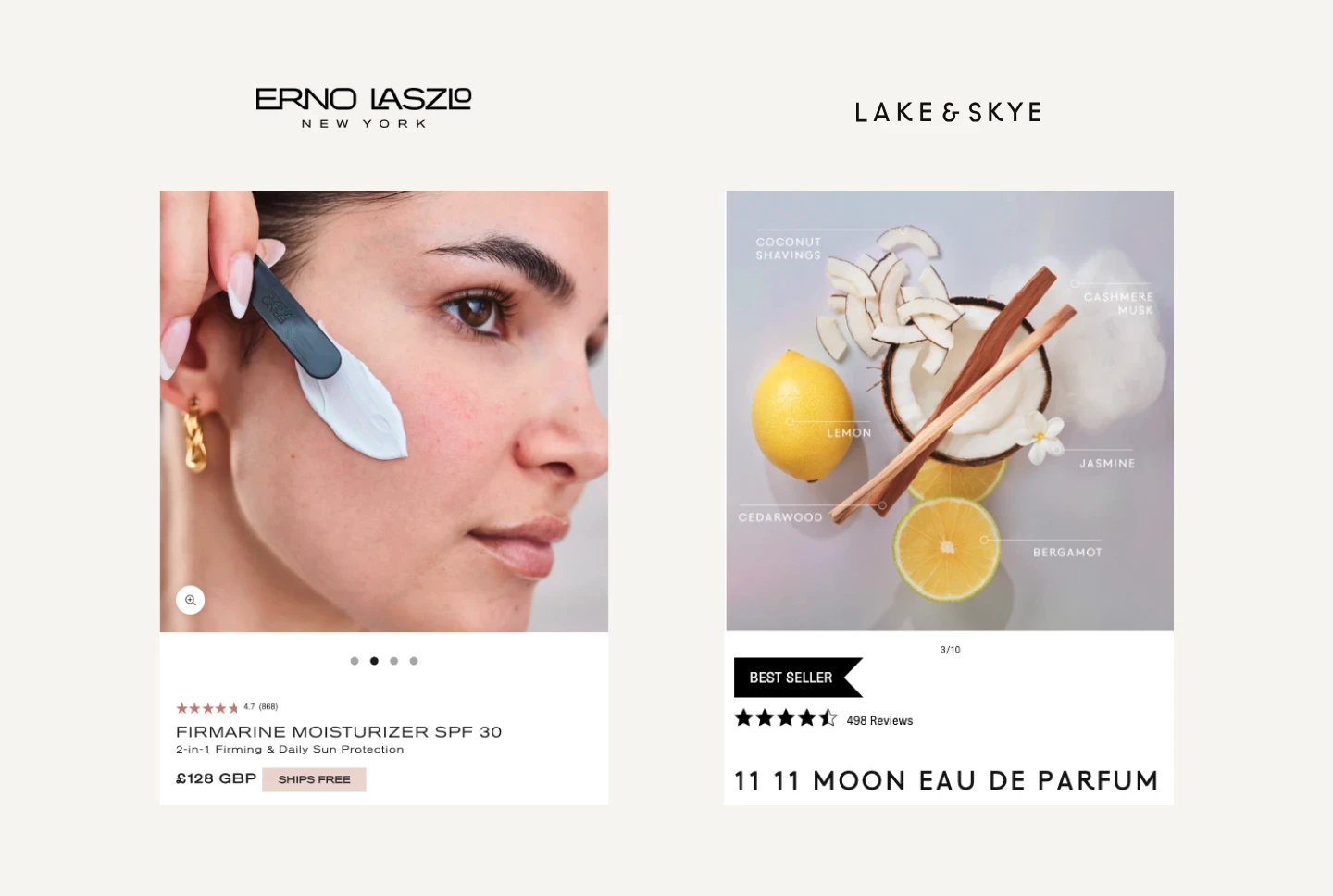
Coverage should match the needs of the category. A beauty product may require texture shots and ingredient visuals, while furniture may require room placement images and scale references. Each image should contribute new information rather than repeating the same perspective.
The anatomy of great product page design
One of the most common mistakes brands make is treating product images as individual assets rather than part of a decision-making system. Effective product page optimization starts with understanding that images should work together to guide shoppers through the buying journey. The strongest PDPs use structured image galleries where each visual answers a different question, building purchase confidence.
Hero images
Capture attention instantly

Hero images are often the first product visuals shoppers encounter in search results, category pages, and marketplaces. Their job is to communicate the product clearly at a glance. In many cases, they determine whether a product sells at first sight.
For food platforms, effective hero images focus attention on the meal itself, helping shoppers quickly assess ingredients, portion size, and overall appeal. KuvStudio can help remove distractions so the product remains the focal point.
Lifestyle images
Create emotional and practical context

Lifestyle images help shoppers imagine products in real situations. Whether showing clothing in motion, furniture inside homes, or beauty products during application, these visuals make products feel more relatable and believable.
A studio product shot may show an armchair clearly, but a lifestyle image reveals how it fits into a real room. This practical context often plays a major role in the purchase decision.
Detail and macro shots
Show texture and quality
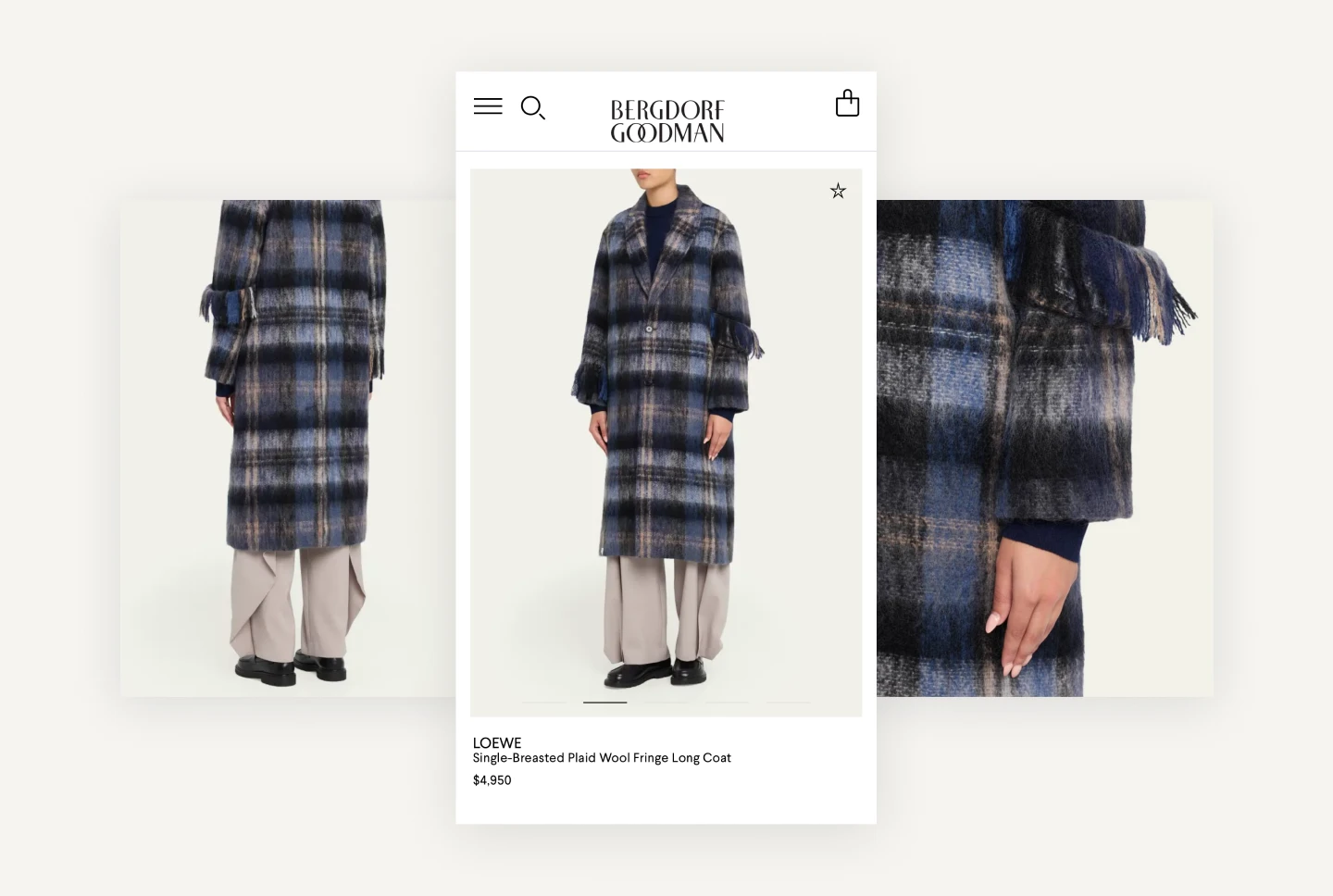
Detail photography reveals texture, craftsmanship, finishes, and material quality that shoppers cannot inspect in person. Video and short-form motion can strengthen this further by showing how materials move and behave in use.
For a luxury wool coat, close-ups of fabric texture, stitching, and finishing details help justify a premium price point. Motion can show how the garment moves, hangs, and drapes on the body.
Variant images
Support comparison
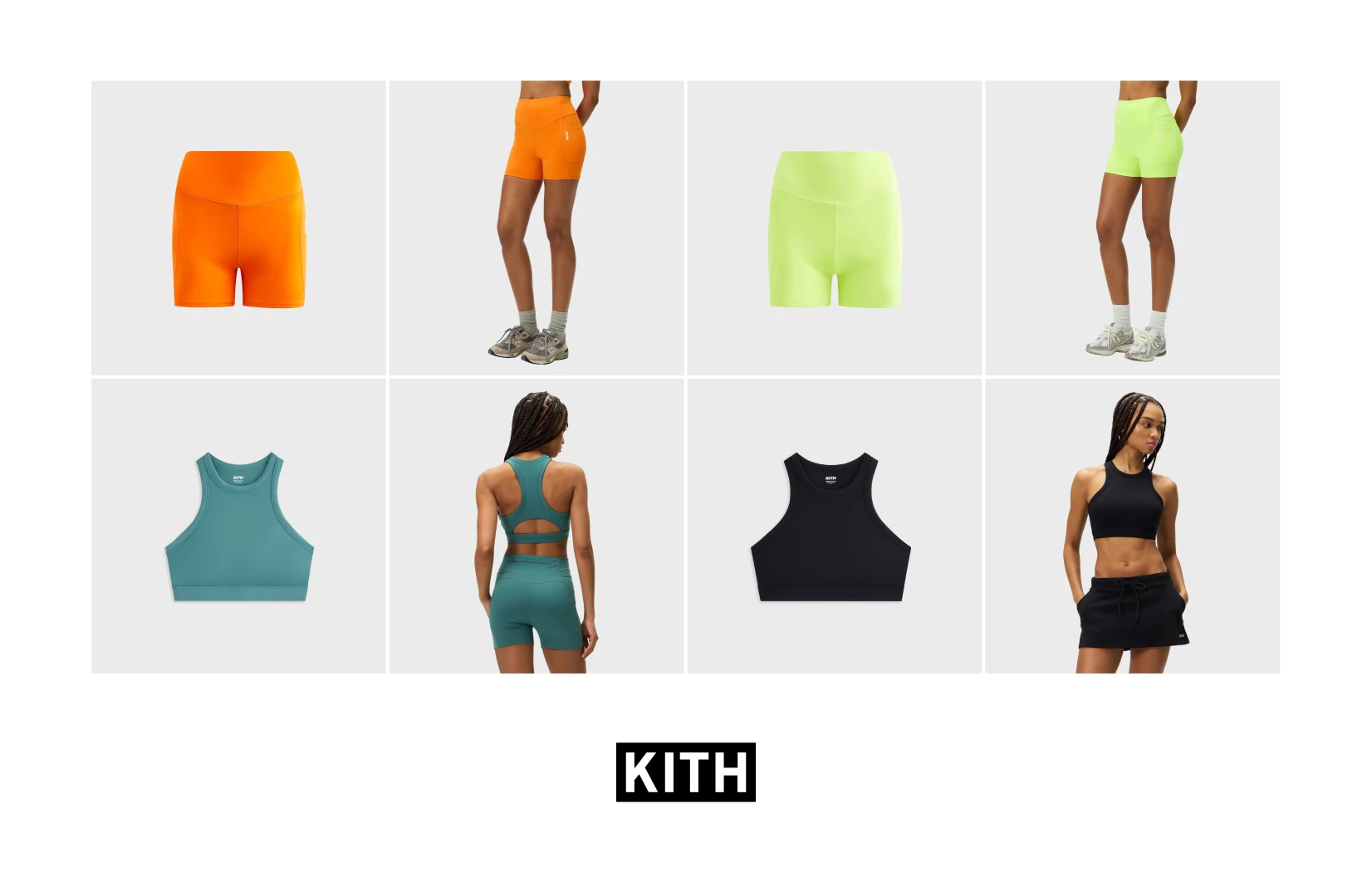
Strong variant galleries help shoppers compare colors, finishes, and product options clearly. Lighting, framing, and image angles should stay uniform across every variation so differences feel easy to evaluate.
When apparel brands photograph one color on a model and show another as a flat lay, shoppers end up comparing presentation styles rather than comparing colors. KuvStudio can help teams generate and manage product variants consistently.
Scale references
Reduce hesitation
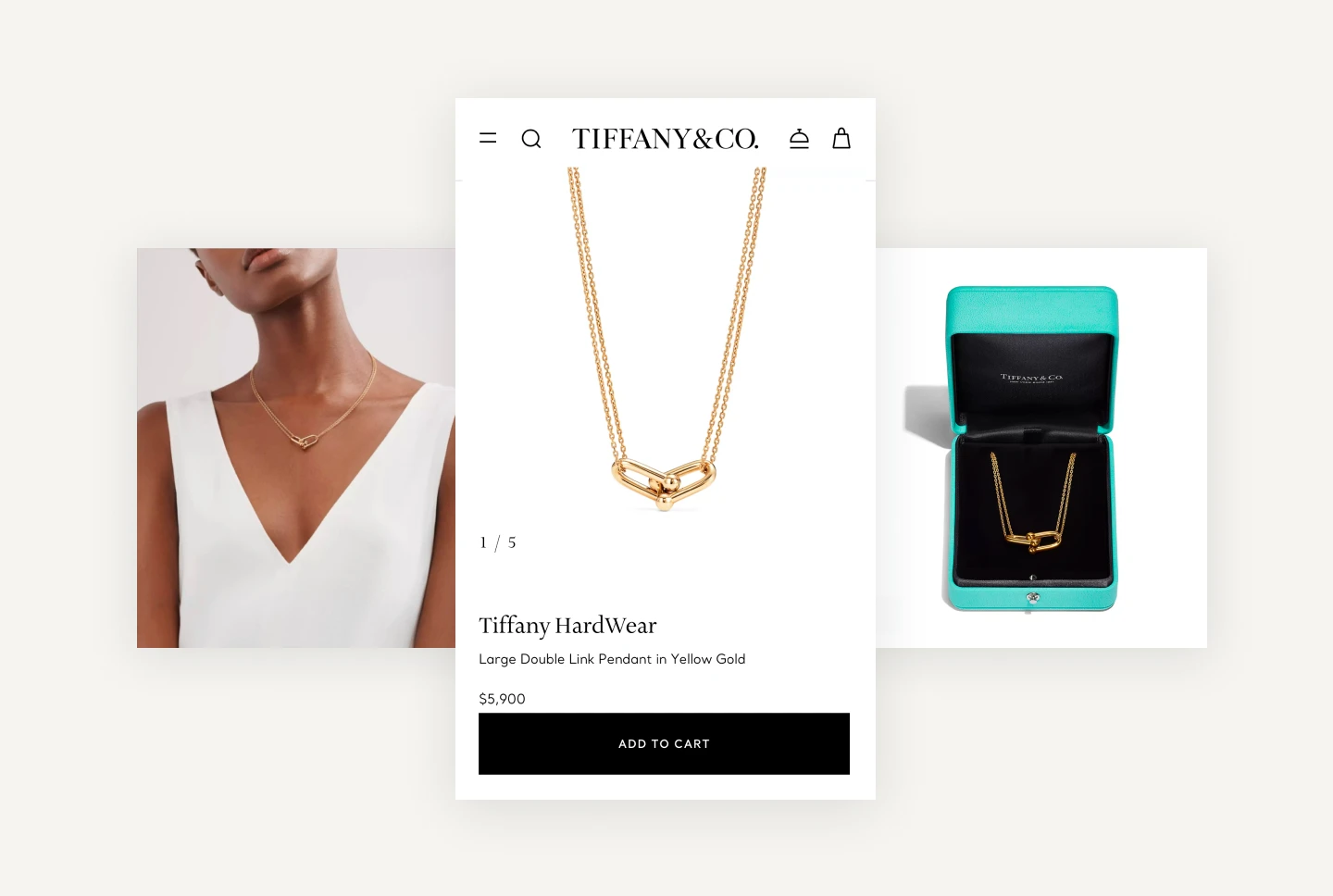
One of the biggest challenges in online shopping is judging size accurately. Simple visual clues such as model photography, hand-held shots, room placement, and dimension overlays help shoppers understand dimensions and proportions before purchasing.
A necklace photographed on a white background may look elegant, but without any scale reference it's difficult to judge the length and where it sits when worn.
Feature callouts
Improve scannability

Feature callouts turn important product details into visual explanations. Annotated images can often communicate dimensions, materials, or functionality faster than large paragraphs of text.
A skincare brand can highlight active ingredients and usage instructions directly within its images rather than relying solely on product copy.
Sequenced image galleries
Guide product evaluation
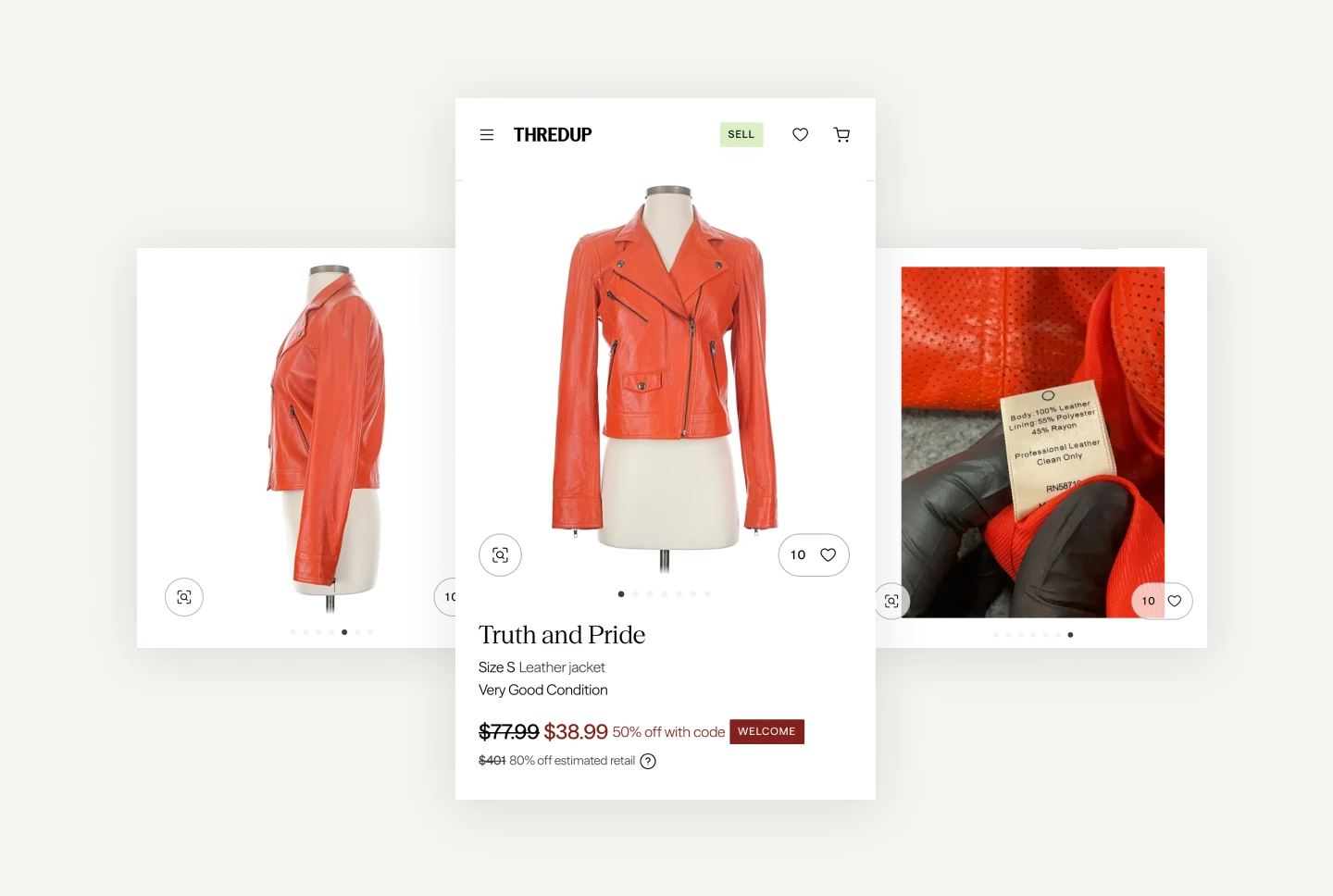
Product image sequencing is the order in which visuals appear on a product page. The most effective PDPs answer shopper questions progressively, moving from overall appearance to fit, materials, condition, and supporting details.
Product image sequencing works best when it mirrors the evaluation process, helping shoppers build confidence step by step rather than forcing them to search for information.
Mobile product page design
Optimize visuals for smaller screens
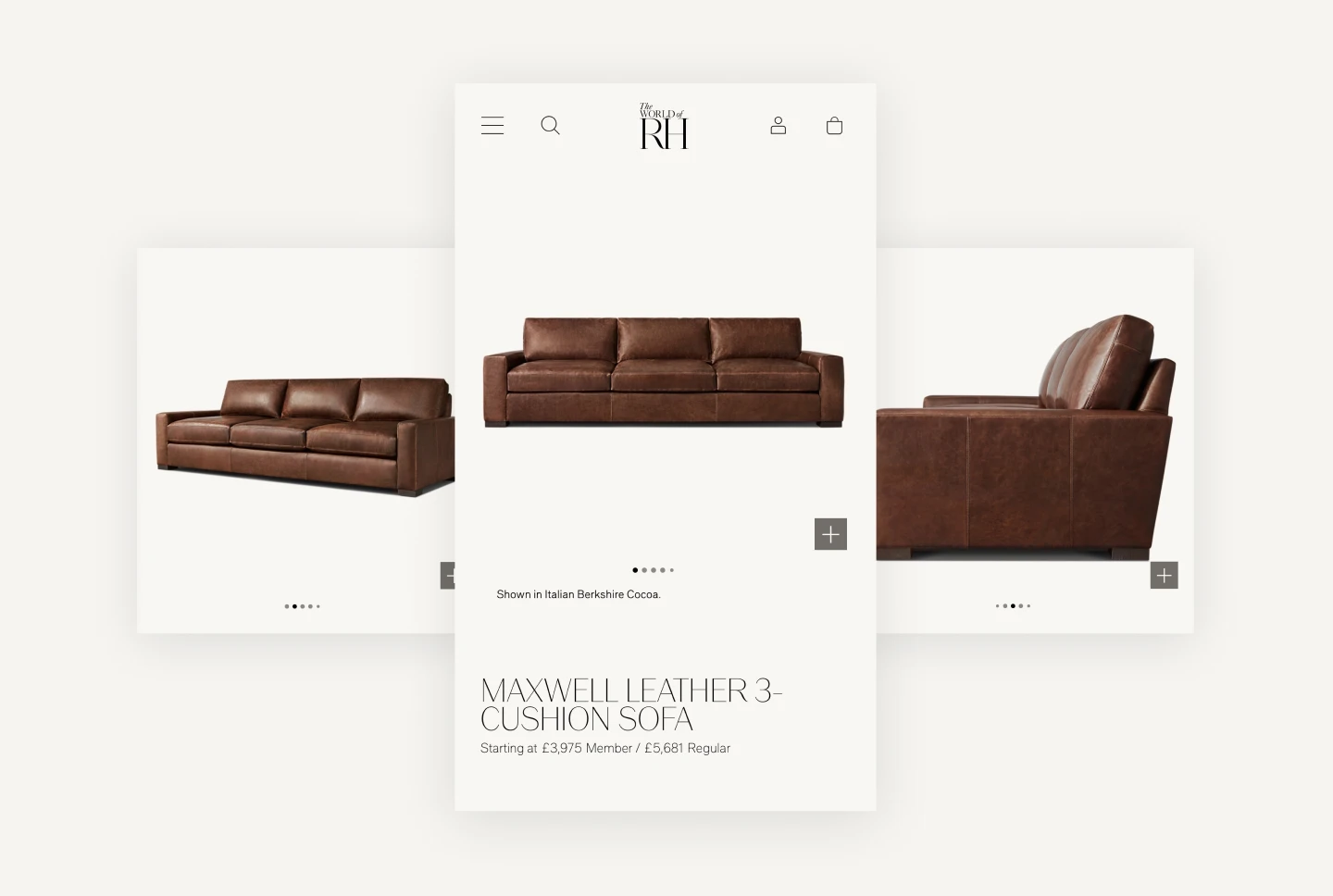
Most product detail page traffic now comes from mobile devices. As a result, mobile product page design should prioritize:
- Appropriate product sizing within the frame
- Consistent product positioning and alignment across images
- Visible product detail
- Optimized image file sizes
- Fast-loading galleries
- Clear swipe behavior
Products should remain easy to evaluate on smaller screens without zooming excessively. Large desktop compositions can leave the product too small to assess on a phone screen.
Which e‑commerce brands are raising the standard
Across categories, the best product pages follow similar principles even when their aesthetics differ. Rather than treating product images as standalone assets, they use visual content to answer shopper questions in a logical sequence, building purchase confidence.
Fashion and beauty: demonstrating movement and texture
Leading fashion brands use movement to communicate fit, drape, and fabric behavior. Static white-background photography still plays an important role, but shoppers increasingly expect richer visual experiences that help them understand how a garment will look and feel in real life.
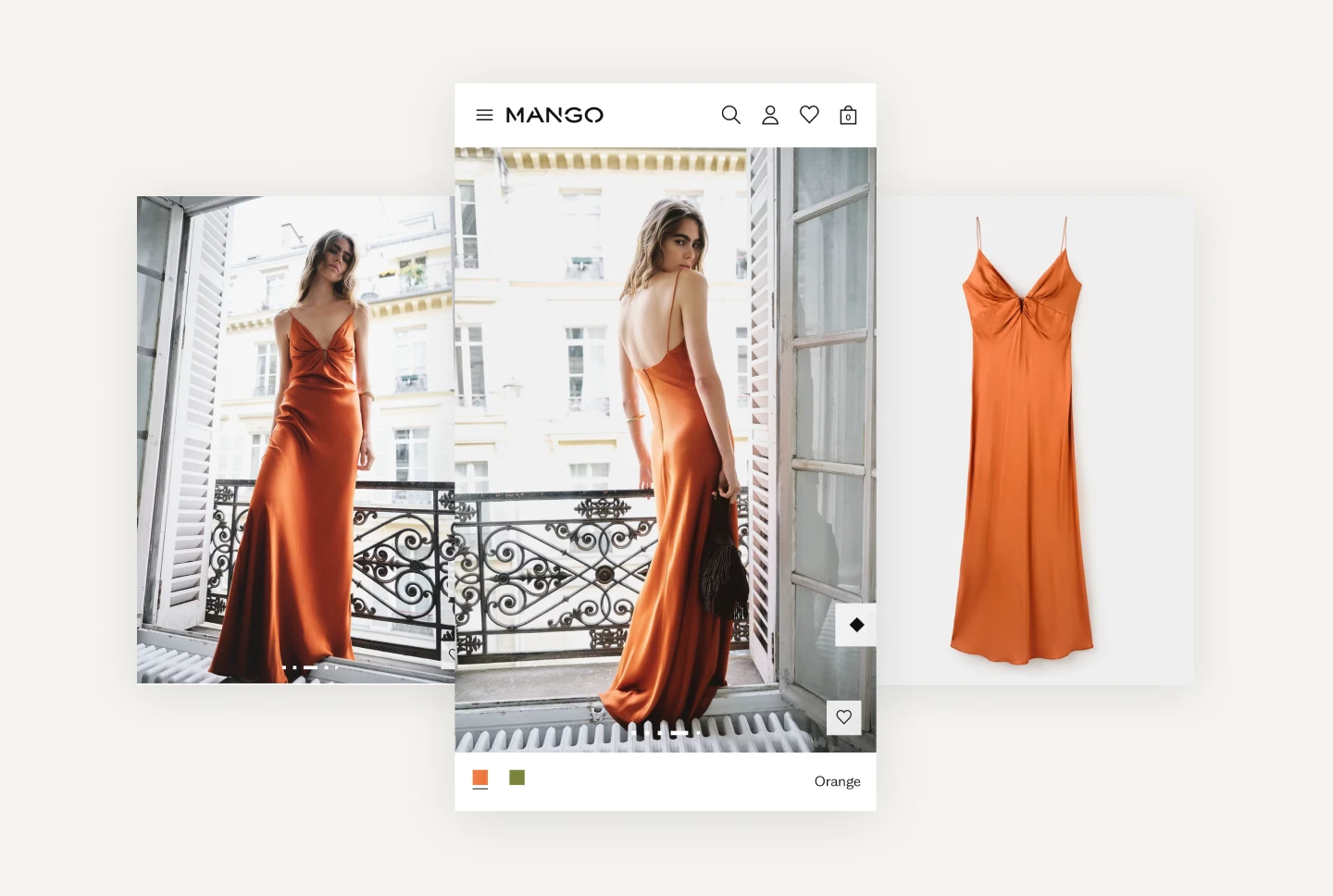
Mango and Zara have long set the standard in this area. Their product pages guide shoppers from inspiration to evaluation, moving seamlessly between aspirational imagery and more practical views of the garment.
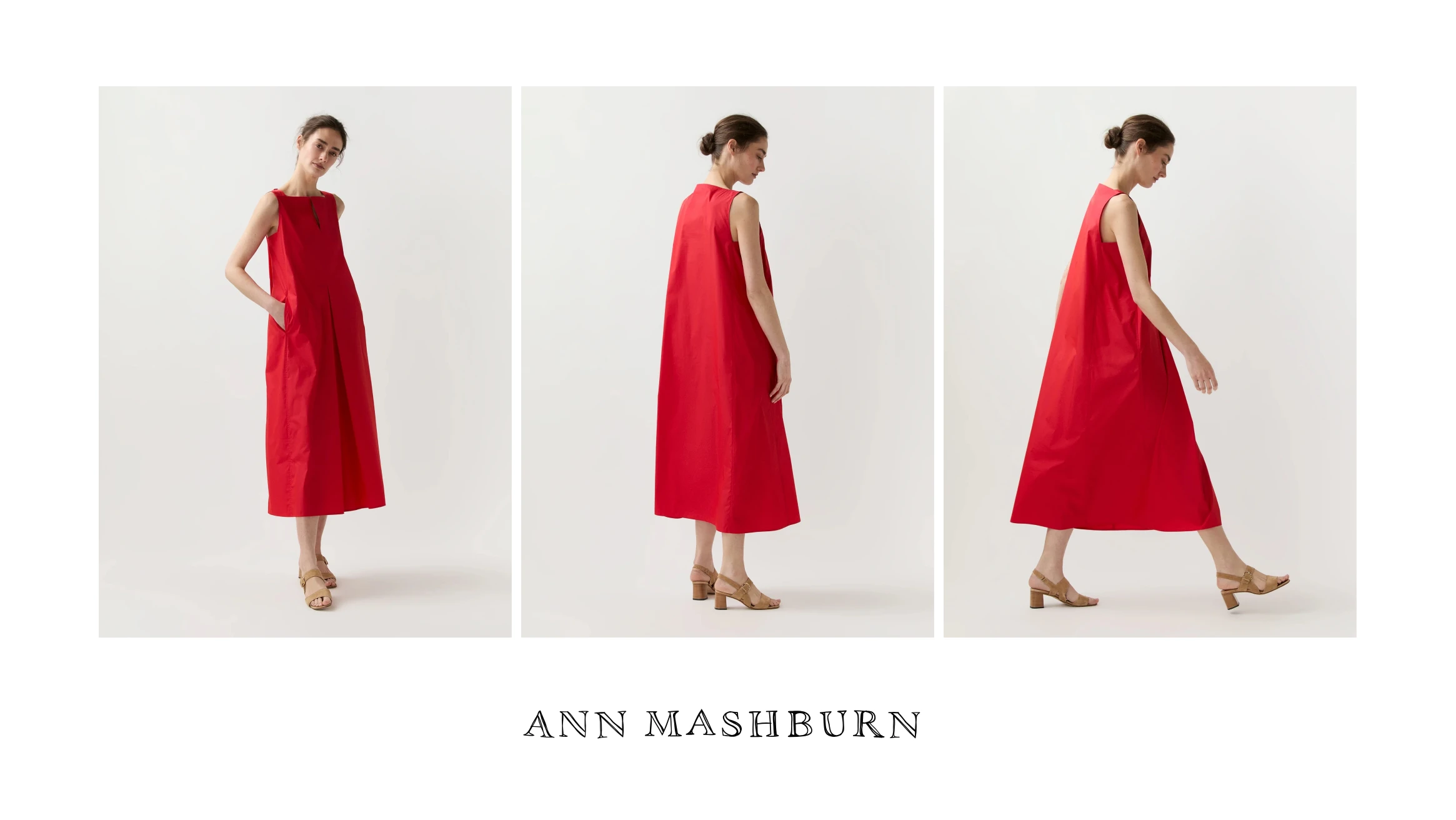
A similar approach can be seen at Ann Mashburn. The brand uses carefully sequenced images that alternate between full-body views and detailed close-ups as the model moves naturally through the frame.
Retailers are also exploring digital twins: high-fidelity digital replicas of products and models that can be reused across merchandising content to increase production efficiency while retaining consistency.
Beauty shoppers need to evaluate products they cannot touch, smell, or apply before purchase. Rather than relying solely on pack shots, strong beauty PDPs use macro texture shots and demonstration content to show how products behave in real-world use.
Home: adopting effective contextual placement
Home and furniture brands increasingly rely on contextual images to help shoppers visualize products in their own spaces. These purchases often depend on scale, proportion, materials, and how a product fits within an existing environment.
Live Outer provides a strong example, presenting outdoor furniture within carefully staged patios and backyard settings. Rather than isolating products against a plain background, the brand shows how pieces interact with their surroundings.
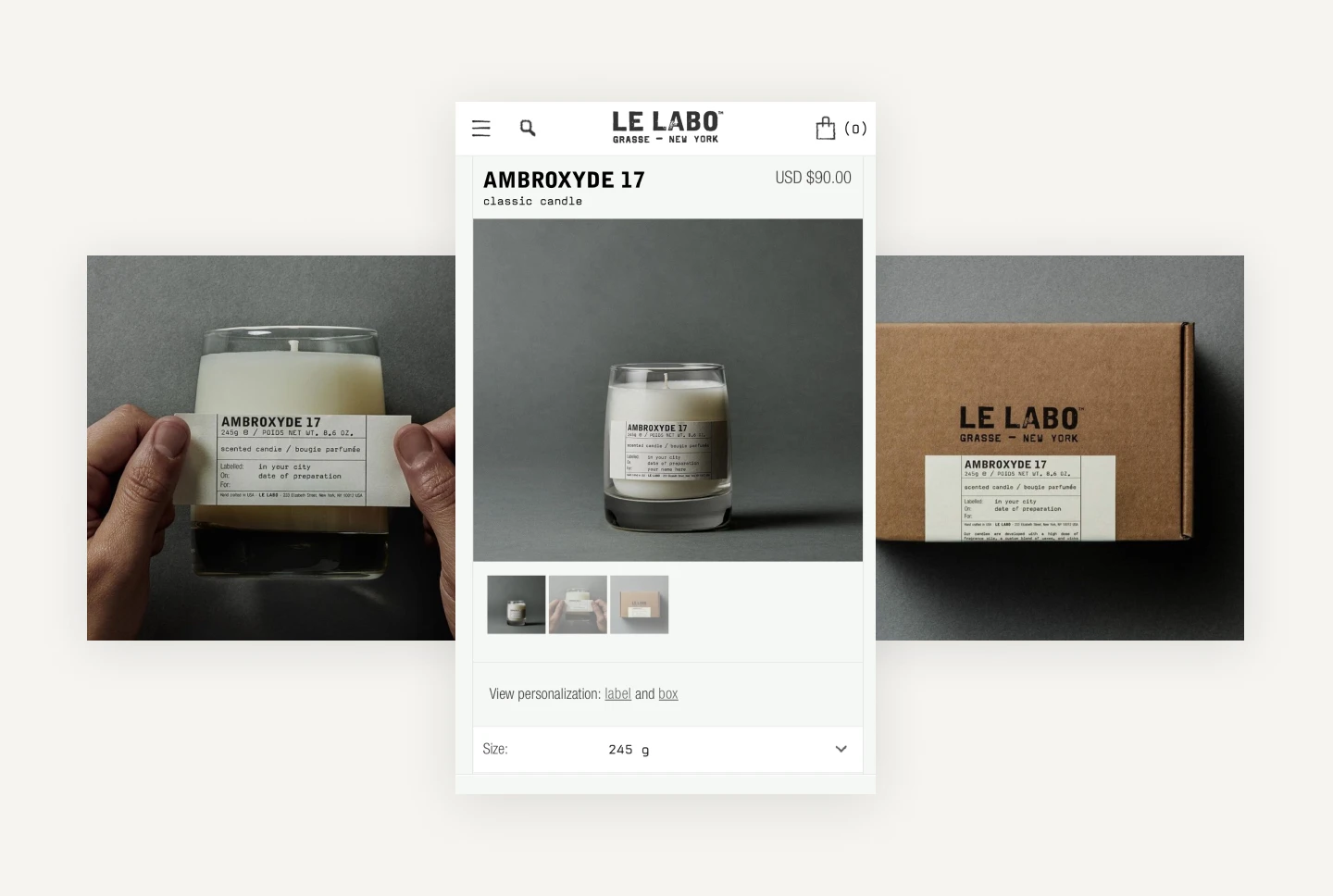
Le Labo extends this idea into ownership itself with images of signature labels being applied by hand, followed by the finished product being packaged for delivery.
Common PDP mistakes hurting conversion
Fixing these issues is often one of the fastest ways to improve product page conversion rate.
| Mistake | What goes wrong | Example | Solution |
|---|---|---|---|
| Every image says the same thing | Repetitive galleries waste valuable PDP space. | A gallery shows front, back, and folded views but never fabric texture, fit, or context. | Keep styling consistent, but make every image contribute new information. |
| No scale reference | Shoppers struggle to judge size or fit. | A luxury candle is never placed beside a hand or familiar object. | Add contextual images, room placement, model photography, or hand-held references. |
| Inconsistent styling | Products feel disconnected across the catalog. | Supplier assets mix staged photography, white backgrounds, and smartphone photos. | Standardize lighting, shadows, crops, alignment, and backgrounds. |
| Unrealistic AI staging | Distorted proportions, shadows, or textures damage credibility. | A food product appears lit from underneath with impossible shadows. | Use realistic backgrounds and believable lighting. |
| Low mobile readability | Wide crops and small products are difficult to evaluate on phones. | A bedding product occupies less than a quarter of the mobile frame. | Use mobile-friendly image sizing and clear product framing. |
| Indistinguishable texture | Shoppers struggle to judge material quality. | A premium blanket never receives a close-up of its weave or finishing. | Use close-up images and high-resolution exports. |
| Poor sequencing | Disorganized galleries create friction. | A bag gallery opens with packaging before a straightforward product view. | Sequence from hero images through to details and scale references. |
| Overly artistic photography | Stylized images can make products hard to evaluate. | A bottle is hidden through colored glass and dramatic shadows. | Keep products recognizable with clear compositions and realistic lighting. |
| Confusing variants | Inconsistent variant images increase uncertainty. | One color is on a model, another outdoors, and a third is a flat lay. | Maintain identical framing, lighting, and angles across variants. |
Future-proofing your PDPs for AI shopping agents
A major shift is reshaping e‑commerce: products are more often being discovered, evaluated, and recommended by AI systems, not just human shoppers.
An AI shopping agent helps consumers discover, compare, and choose products by interpreting information across search results to determine whether a product is trustworthy, relevant, and recommendation-worthy.
What do AI shopping agents look for when evaluating a product page?
AI shopping agents evaluate:
- Structured product schema (JSON-LD)
- Product titles and descriptions
- Alt text
- Image labels and filenames
- Variant consistency
- Price and availability
- Return policy information
- Catalog consistency
Humans evaluate visuals instinctively. AI systems evaluate the underlying structure supporting those visuals. That means agent-ready PDPs need to work for both people and machines.
| Human shopper looks for | AI shopping agent looks for |
|---|---|
| Product images | Structured product schema |
| Visual trust signals | Metadata consistency |
| Lifestyle context | Alt text and image labels |
| Reviews and ratings | Variant relationships |
| Product benefits | Structured attributes |
| Emotional appeal | Machine-readable organization |
| Mobile usability | JSON-LD markup |
| Brand credibility | Catalog consistency |
In practice, that means improving product page alt text, image labeling conventions, structured metadata, variant organization, and product accuracy.
A file named product-image-4.jpg tells an AI agent very little. A filename such as black-leather-crossbody-bag-side-view.jpg provides much stronger product context. A centralized product catalog keeps image metadata, naming conventions, descriptions, and variants consistent across channels.
What feeds AI search and shopping agent recommendations?
Metadata alone is not enough. To improve visibility across AI-powered discovery channels, brands need structured product data that both AI search systems and shopping agents can easily interpret.
Whether someone is asking ChatGPT, Claude, Google AI Overviews, or a dedicated shopping agent for product recommendations, these systems rely heavily on machine-readable information to understand products and determine which results to surface.
Structured product schema, typically implemented through JSON-LD markup, helps provide that context. Key fields include:
- Product name
- Product images
- Pricing
- Availability
- Reviews and ratings
- Return policy information
When this information is structured correctly, AI search systems can more accurately understand and reference products in generated responses, and AI shopping agents can evaluate products against user preferences, compare options, and make more confident recommendations.
The future of visual commerce will be shaped by both human shoppers and AI systems. The brands that succeed will build product experiences that earn trust from both.
As AI-assisted search and commerce continues to evolve, maintaining machine-readable product catalogs becomes a larger operational challenge, especially for marketplaces and retailers managing thousands of SKUs. That is why scalable visual systems matter more than ever.
Building scalable product page systems across your catalog
Great PDPs are where first impressions become purchase decisions. They succeed when every element, from images and product information to reviews, pricing, and delivery expectations, works together to drive conversions.
The strongest PDPs use every image intentionally, from capturing attention to answering the questions shoppers need resolved before purchasing.
Whether a brand manages 50 SKUs or 50,000, the goal remains the same: help shoppers move from curiosity to confidence. Every product page should answer key questions, reduce uncertainty, and make it easier to buy.
As e‑commerce becomes more visual, more mobile, and increasingly influenced by AI systems, the brands that stand out will be those that treat product images as a system rather than a collection of individual assets.
People buy pictures and receive products.
The best PDPs are built through clear standards, repeatable workflows, and a deep understanding of what shoppers need to see before they buy.
Want to go deeper? Join the conversation in our upcoming webinar or get your PDP reviewed live. Register now to save your spot.